Pages

Showing posts with label Maths. Show all posts

Thursday, 22 August 2019

Pythagoras Theorem

In Maths Mr. Rees has been teaching us about Pythagoras Theorem.
The Pythagorean Theorem is a statement in geometry that shows the relationship between the lengths of the sides of a right triangle – a triangle with one 90-degree angle. The right triangle equation is a2 + b2 = c2. Being able to find the length of a side, given the lengths of the two other sides makes the Pythagorean Theorem a useful technique for construction and navigation.

Hypotenuse:
The hypotenuse is a word used in Pythagoras Theorem. The Hypotenuse is the side opposite of the Right Angle and it is also the longest side.

Example:
 The 5 stages of Pythagoras Theorem are,
1. Draw and Label your Diagram,
2. Write down the numbers you are given,
3. Write the Proof/Theory/Formula of a right angle triangle,
4. Put the numbers in, carry out operation,
5. Answer with units


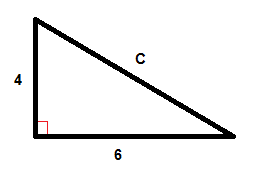
right triangle
A= 4
B= 6
C= ? = Hypotenuse

What is squared? Squared is basically the number timed by itself. It you see the little 2 symbol above the letter that is identifying that the number is squared. 
To calculate the length of C we can use a squared + b squared = c squared

4 squared + 6 squared = C squared

16 + 36 = 52
Then we have to square root it.

Square root is basically what number timed the same number equals the number you already have.

The Square Root of 52 =7.21
This therefore means that the length of side C is 7.21

What is Pythagoras Theorem used for in real life?
It is used for things such as,
Architecture, Construction, Laying out square angles, Navigation and Surveying. 

How does Architecture use it?
Given two straight lines, the Pythagorean Theorem allows you to calculate the length of the diagonal connecting them. This application is frequently used in architecture, woodworking, or other physical construction projects. For instance, say you are building a sloped roof. If you know the height of the roof and the length for it to cover, you can use the Pythagorean Theorem to find the diagonal length of the roof's slope. You can use this information to cut properly sized beams to support the roof, or calculate the area of the roof that you would need to shingle.

Wednesday, 7 August 2019

Design a Game in Maths

For the past two weeks in Maths we discovered that we didn't really understand what other words for basic operations were. So we thought and we decided that we would do some research about other words that stood for the basic operations. We did this research in groups and after that research we made four word clouds, one for each basic operation. Here are these word clouds. 
Next we decided that we would try and make a Maths game about these words . We did some research around games and how we could incorporate those words into them this is our design process for our game. 

Next we had to actually decide on what game we were actually going to create. We looked at our ideas and decided on a game and made a slide show. For the game we had to include the other words for the operations and we came up with, Plus, Plus, Minus, Divide or Times.
This is that slide show,


Then we made a Screencastify explaining our game, This is the Screencastify 


Wednesday, 26 June 2019

Calculating squares on the outside of a grid

For the past week we have been learning about how to calculate the squares on the outside of a 10 by  10 grid we came up with 6 calculations on how to do it. Today I will share two with you, one I came up with and the other my class found out together.
First Method:
10 x 4 - 4 = 36
So the reason for this is there are 10 squares of each side of the grid and there are 4 sides. So we do 10 x 4 but then we takeaway 4 because the corners are counted more than once.
Now lets replace the numbers with letters,
4n - 4 =36
Lets try this theory on a larger grid, lets do a 60 by 60.
60 x 4 = 240, 240 - 4 = 236

Final Method:
10 + 10 + 8 + 8 = 36
So the reason for this one is we count the whole row on the top and bottom which each are 10 then take the corners away and count the two sides and you have two 8's.
Convert numbers to letters:
n + n + (n - 2) + (n - 2) = 36
Lets try this one on a larger grid, 60 + 60 + 58 + 58 = 236.
This is the grid with all the answers,
Do you think there are any other ways to work out this problem?
Let me know in the comments below.

Wednesday, 15 May 2019

Maths

Big Numbers:
How many liters of water in the ocean?
Roughly 1,260,000,000,000,000,000,000 liters

How many grains of sand on all beaches in the world?

There is 500,000,000,000,000,000 grains of sand in the world.

How many planets are there in the whole universe?

There are 30,000,000,000 planets in the whole universe.

Names For Big Numbers:

Kilo= 10’3, 1000. Kilogram, Kilometre, Kilowatt, Kilobyte, Kilovolt, Kilobase, Kilobaud, Kilobars, Kilobits.


Mega= 10’6, 1,000,000. Megabyte, Megatron, Megawatt, Megastar, Megabuck, Megalith, Megadose.


Giga= 10’9, 1,000,000,000. Gigabyte, Gigantic, Gigawatt, Gigaflop, Gigabits, Gigatons,
Gigantor, Gigantos.


Tera= 10’12, 1,000,000,000,000. Terabyte, Teraflop, Terawatt, Teratoma, Teratoid, Teratism, Teraphim, Teraohms.


Peta= 10’15, 1,000,000,000,000,000. Petabyte, Petaloid, Petalous, Petaline, Petalled, Petalody, Petaurus, Petalism.

Tera Meaning: Comes from the Greek word meaning Monster,

Giga Meaning: From the greek word meaning Giant,

Peta Meaning: Comes from a greek word meaning Five,
Rules of Indices: The power, also known as the index, tells you how many times you have to multiply the number by itself. For example 3^4, this means that to have to do 3 x 3 x 3 x 3 which equals 81. Credit to Revision Math's for the information
Traveling round in an Airbus A380: For this project we had to Calculate the distance from the Earth to three of the planets in our Solar System. We did Jupiter, Saturn & Venus. For Example I'll do Jupiter. The way we calculate this is we divide the speed by the distance. So we do 588 x 10^6 divided by 925 which equals 635675.7 hours. Then we convert to days which is 264864875 Days. The way we do that is we divide the amount of hours by the hours in a year. Then to convert to years we divide the days in a year by our previous answer which is 72.56 years.
This is the slide we made,

Percentage Calculations:

In our Maths class we wanted to know if the planets in our Solar System were evenly spaced. We also wanted to the know the space between the planets nad the percentages of them.
This is our answers


Sun-Mur57.9 mil km57.9 x 10<6 =1%
Mer-Ven50.2 Mil Km50.2 x 10<6 =1%
Ven-Ert41.4 Mill Km41.4 x 10<6 =2%
Ert-Mar78.3 Mil Km78.3 x 10<6 =3%
Mar-Jup504.4 Mil Km504 x 10<6 =12%
Jup - Sat646 Mil Km646 x 10<6 =17%
Sat - Ura1.44 Bil Km1.44 x 10<9 =30%
Ura - Nep1.627 Bil Km1.627 x 10<9 =34%
The Whole:4018590000

Thursday, 21 February 2019

Sundials


1. Did you know a mathematician and astronomer called Theodosius is said to have invented a universal sundial that could be used anywhere in the worked.
I got this information from History of Sundials

2. I learnt that sundials can also be used at night. Because the moon is sufficiently bright that the lunar age is known.
I got this information from this website

3. I didn't know that the stick  in the sundial actually has a name. Its name is Gnomon.
I got this information from Sundials on Wikipedia


How we made the Sundial:
I made the sundial with Austin and Michael. First off we grabbed a square piece of wood approximately 300 millimetre's by 300 millimetre's. The next thing we did was use sand paper and sanded the edges so the didn't look so ruff. Our next step was to drill the hole in the middle for the Gnomon. So we measured the hole in the exact middle and drilled it. Next we needed a Gnomon to put in the hole, so we got a piece of dowelled and the  first piece we cut was too long and not wide enough so we tried gluing it. Then the next day we looked at our sundial to see if it was was stuck but it wasn't so we had to cut a wider piece of dowelled and it fit perfectly. Our next job was to measure out the numbers, we used a protractor to do this. Once we were done in the workshop we came back our Maths classroom and coloured each section a different colour but we doubled up on one colour. Overall I am quite proud of my product.

What I learnt:
I learnt different steps to making a sundial.

What I had fun with:
Drilling the hole and colouring it in was probably my favourite parts.

What I found difficult:
Defiantly making out the angles for the numbers.

What would I do different:
Make it a circle and make it smaller so it is easier to colour in.

Video on Sundials

Wednesday, 5 September 2018

Maths DLO

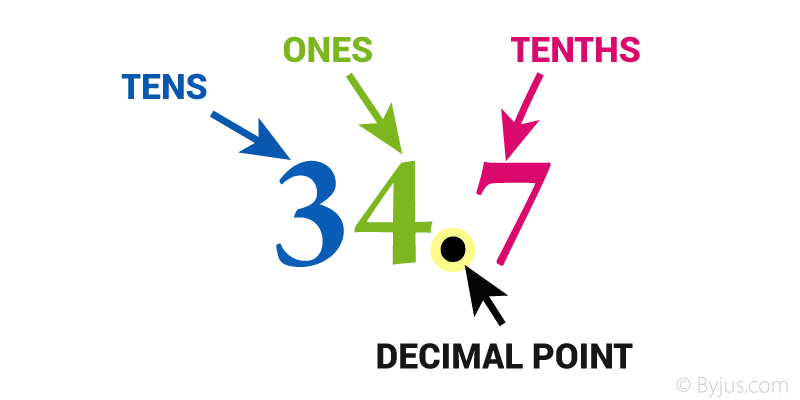
Image result for decimalsLast week for Maths we learnt about Fractions and what they are in a Decimal. For Example 1/4 is 0.25 in a decimal. Another Example is 4/5 is 0.8. So, 3/4, if 1/4 is 0.25 that means that 0.25 x 3 = 0.75. 
Image result for Fractions

Friday, 16 March 2018

What I've Learnt This Week

This week I learnt how to make a chart on google sheets. I used this for my maths this week which I am going to show you. To make a chart you put your information on the sheet, then press insert then press chart and it will come up. Enjoy